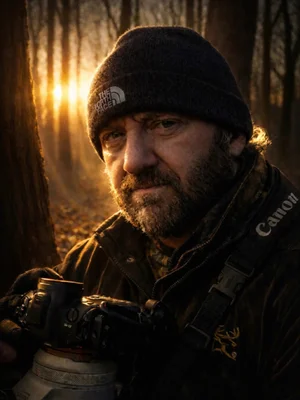
When did photography become a numbers game?
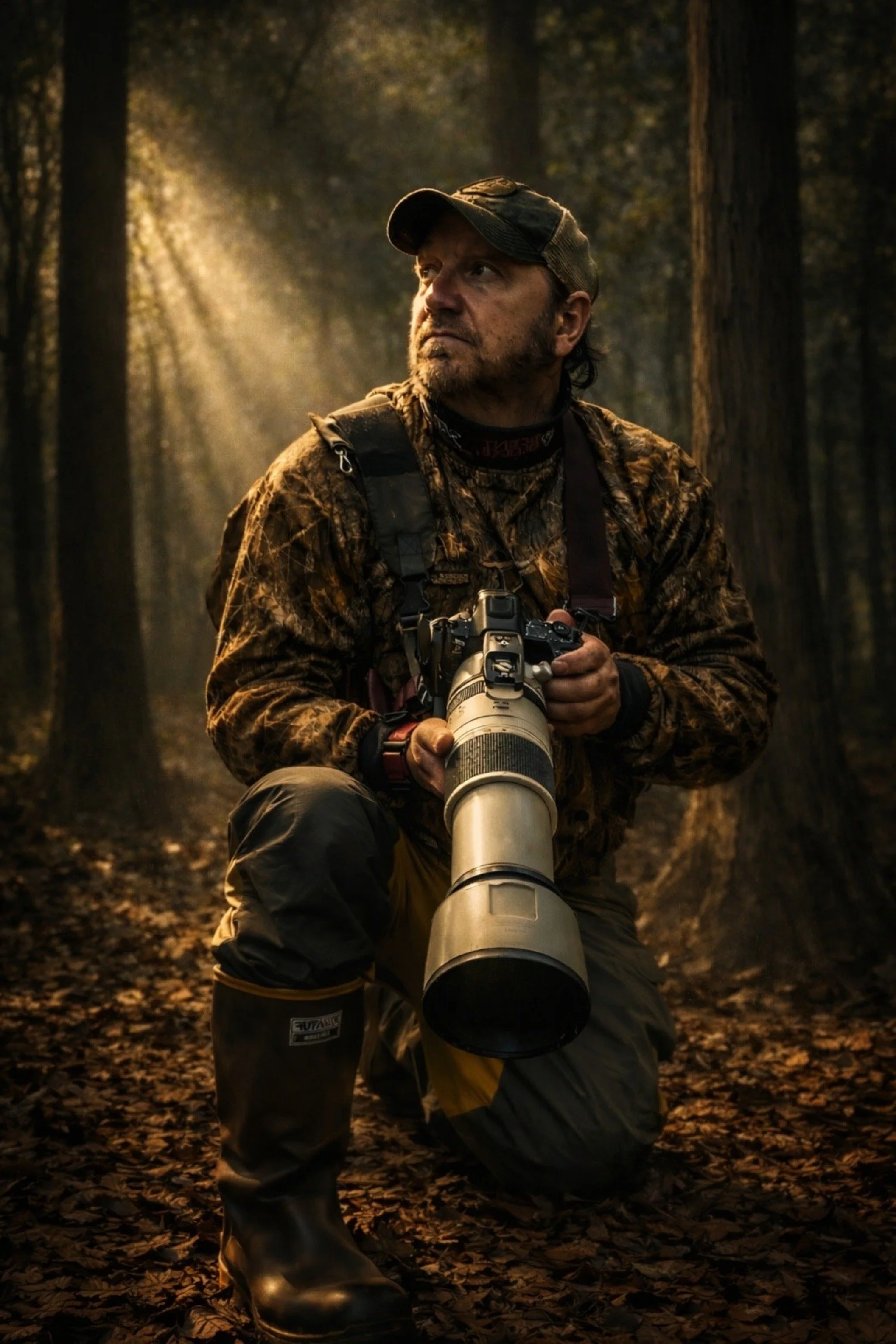
When Did Photography Become a Numbers Game?
Instagram, likes, followers, anxiety, and remembering why we picked up a camera in the first place.
I’ve been thinking about something lately. And fair warning, this might be one of those subjects that ruffles a few feathers. Not my intention, but I’ve never been particularly good at keeping my thoughts to myself.
I’m talking about photography, social media, Instagram, and the enormous amount of stress and anxiety I see photographers experiencing over likes, followers, engagement, algorithms, and posting schedules.
And before anyone gets their feathers ruffled, let me make something perfectly clear.
I’m not making fun of anyone. I’m not dismissing anyone’s anxiety. And I’m certainly not suggesting that what someone feels isn’t real.
I’m simply saying that, coming from a very different background in photography, I genuinely struggle to understand it.
And maybe that’s worth talking about.
Back When Photography Required More Than a Password
I started photography in a different world.
A world of film, darkrooms, contact sheets, physical portfolios, and enough rejection to make a door-to-door vacuum cleaner salesman look successful.
There was no Instagram. No Facebook. No website where you could upload your photographs and have someone halfway around the planet admire your work while sitting on the toilet.
There were no followers. No likes. No algorithms deciding whether your photograph deserved to be seen.
If you wanted people to see your work, you had to get off your ass and physically put it in front of them.
And believe me, that wasn’t nearly as glamorous as it sounds.
You built portfolios. Actual physical portfolios. You selected your best photographs, paid to have them printed, organized them, and carried them around like a traveling salesman.
You walked into newspapers, magazines, businesses, galleries, and just about anywhere else that might give you five minutes of their time.
And most of the time?
You got rejected.
Or ignored.
Or someone politely told you they’d be in touch, which was usually code for don’t hold your breath, pal.
I would estimate that 98% of those attempts went absolutely nowhere.
But you kept doing it.
Because that was the job.
Want to Sell a Photograph? Better Have a Strong Back.
Today, a photographer can upload an image to a website and potentially sell a print to someone on the other side of the country while sitting at home in their underwear.
Before those options existed?
You spent your own money having prints made. You bought mats, frames, display equipment, tables, and whatever else you needed.
Then you loaded everything into a vehicle and headed off to art fairs, festivals, and shows.
You set up your booth. You stood there for hours. Sometimes in the heat. Sometimes in the cold. Sometimes watching people walk past your photographs like you were selling used socks.
You smiled. You talked. You explained your work.
And if you were lucky, you sold enough to cover the cost of being there.
If you weren’t lucky, you packed everything back up, drove home, unloaded it, and wondered whether you should have become a plumber.
At least plumbers got paid when somebody needed them.
And it didn’t stop at art shows.
We carried our photographs into restaurants, coffee shops, bars, dentists’ offices, doctors’ offices, and just about any business with an empty wall.
We asked owners if they’d display our work. Maybe sell a print. Maybe give us a little exposure.
Sometimes they said yes.
Most of the time they didn’t.
But that was how you got your photographs in front of people.
Because if you didn’t do that work, nobody saw your photographs.
And I mean nobody.
Not fifty people.
Not twenty.
Nobody.
Your beautiful photograph of a mountain sunrise could sit in a box for years, admired by exactly three people, one of whom was probably your mother.
And even she might have suggested you get a real job.
Now We Have Instagram. And Somehow, We’re More Stressed?
This is where I start scratching my head.
I regularly hear photographers talk about how stressful Instagram has become.
How difficult it is to find time to post.
How much anxiety they experience trying to maintain a posting schedule.
How discouraged they feel when a photograph doesn’t receive enough likes.
How upsetting it is when their follower count drops.
I’ve even watched photographers become genuinely devastated because an image they loved received only a few hundred likes.
And again, I’m not questioning their feelings.
I believe them when they say they’re stressed.
I just don’t understand how we got here.
Because from where I stand, a few hundred people looking at and appreciating one of my photographs is a pretty damn remarkable thing.
Think about that for a moment.
Two hundred people.
Imagine standing in a gallery, looking around, and seeing two hundred people who showed up to see your work.
People who stopped, looked at something you created, and took a moment to say they liked it.
When I was building my photography career, I’d have been walking on the moon.
Hell, I’d probably have bought everybody a beer.
Before social media, unless I was fortunate enough to have an image published in a newspaper or magazine, I couldn’t count on a hundred people ever seeing a particular photograph.
Today, we can reach hundreds, thousands, sometimes millions of people with a few taps on a phone.
And somehow, we’ve convinced ourselves that a few hundred people appreciating our work is a failure.
That’s the part I can’t wrap my head around.
When Did a Number Become the Judge of Our Photography?
Somewhere along the way, I think something changed.
Photography started becoming less about the photograph and more about how the photograph performed.
We started hearing terms like reach, impressions, engagement rates, optimal posting times, content strategies, and algorithm optimization.
Good Lord.
I thought I was a photographer. Apparently, I’m supposed to be a marketing department, social media strategist, data analyst, and part-time computer scientist.
All while trying to photograph a wolf that couldn’t care less about my engagement rate.
And I have to wonder whether we’ve lost a little perspective.
A photograph doesn’t become better because it gets 10,000 likes.
And it doesn’t become worse because it gets 47.
A photograph that took years of experience, thousands of miles of travel, hours of patience, and a little luck to capture doesn’t suddenly lose its value because Instagram decided not to show it to many people.
Yet I see photographers questioning their talent, their abilities, and sometimes their entire future because of those numbers.
That genuinely bothers me.
Not because I think they’re foolish.
But because I hate seeing people allow something so far removed from the actual craft to rob them of the joy of photography.
An algorithm doesn’t know what it took to make that photograph.
It doesn’t know about the freezing mornings, the missed meals, the money spent, the miles traveled, or the years spent learning how to recognize a moment before it disappears.
And it sure as hell doesn’t know the difference between a photograph that took five years to capture and one somebody snapped while walking to the mailbox.
Yet we sometimes give that algorithm more authority over our confidence than our own experience and judgment.
That’s a hell of a lot of power to hand over to an app.
But I Also Know the World Has Changed
Now, before somebody accuses me of being out of touch with modern photography, let me acknowledge something.
Social media matters.
For some photographers, it matters a great deal.
It’s how they find customers, build relationships, sell their work, attract sponsors, and earn a living.
I understand that.
And when your income depends on visibility, a sudden drop in engagement can feel like a real threat to your livelihood.
There’s also pressure to stay relevant, keep posting, answer messages, create videos, follow trends, and compete in an endless stream of content.
And I can see how comparing yourself to thousands of other photographers every single day could wear on someone.
That’s a kind of pressure that simply didn’t exist when I first started working to get my photographs noticed.
There were plenty of other pressures, of course.
But we weren’t carrying a constantly updating scoreboard in our pockets.
And maybe that’s the difference.
I can put Instagram down and walk away without giving it another thought.
For someone who has built their career, identity, or sense of accomplishment around that platform, walking away might not feel nearly as simple.
I may not fully understand that feeling, but I can respect that it’s real.
And I do.
The Posting Stress Is Another Thing I Struggle With
I hear photographers say they spend enormous amounts of time worrying about what to post, when to post, what caption to write, and whether their audience will respond.
For me?
I pick a photograph. I post it.
Usually takes me less than a minute.
Now, if I’m writing something thoughtful, telling a story about a particular image, or sharing an experience from the field, sure, I’ll spend more time on the caption.
I enjoy that part.
But I don’t sit around worrying whether Tuesday at 7:43 p.m. is the magical moment when the Instagram gods will bless my photograph with an extra 36 likes.
If I have something to share, I share it.
If I don’t, I don’t.
Sometimes I post frequently. Sometimes I disappear for a while because I’m out doing the very thing that made me a photographer in the first place.
Taking photographs.
And I can’t help wondering how many photographers are spending more time worrying about posting their work than enjoying the process of creating it.
To me, that’s backwards.
But again, that’s my perspective, shaped by a career that began without any of these platforms.
Would There Be as Many Photographers Without Social Media?
Here’s another thought I’ve had, and this one might get me into a little trouble.
I genuinely believe that without social media, there would be far fewer people pursuing photography.
Now, before anyone gets upset, I’m not saying that’s a good thing.
I’m not saying it’s a bad thing.
And I’m certainly not saying photographers who built their careers through social media aren’t talented or dedicated.
Some of the most extraordinary photography I’ve ever seen comes from photographers who have embraced digital technology and social media.
The talent out there is staggering.
And I love that technology has made photography accessible to so many more people.
But I do wonder how many people would have pursued photography if they had to go through what was once required just to get their work seen.
If there were no followers to gain.
No likes to collect.
No instant feedback.
No audience waiting on the other side of a screen.
If getting your work seen meant spending your own money on prints, loading a vehicle, driving six hours to an art fair, standing there all weekend, and going home without selling a damn thing.
Would they still do it?
Some absolutely would.
Others, I suspect, wouldn’t.
And that’s not an insult. It’s simply a question about how much the rewards and expectations surrounding photography have changed.
For some, photography is about creating images.
For others, photography and the social media experience have become deeply connected.
And I wonder whether some of the anxiety comes from those two things becoming almost impossible to separate.
If the likes disappeared tomorrow, would you still love photography just as much?
Would you still get up at four in the morning?
Would you still hike those miles, sit in the cold, wait for the light, or spend hours hoping an animal might finally step into the right place?
Would you still make photographs knowing almost nobody might ever see them?
I would.
Because that’s exactly how I started.
And I still do it today.
I Actually Love What Social Media Has Given Us
Despite everything I’ve said, don’t mistake me for somebody who hates Instagram.
I don’t.
Quite the opposite.
I think it’s an incredible tool.
It’s allowed me to share my photography with people I never would have reached otherwise.
I’ve met some wonderful people through it. I’ve discovered remarkable photographers, found inspiration, learned things, shared stories, and made connections that simply wouldn’t have existed when I started.
I can show someone halfway around the world a wolf I photographed in Yellowstone or a sunrise in the desert.
Think about how extraordinary that really is.
What once required printed portfolios, endless phone calls, travel, postage, and a fair amount of begging can now happen almost instantly.
That’s amazing.
And I appreciate it.
But here’s the difference.
I look at Instagram as a tool. Not as a measure of my worth or the quality of my photography.
It’s a portfolio I can carry in my pocket.
It’s a place to share stories.
It’s entertainment.
It’s inspiration.
It’s an opportunity to connect with people who appreciate the same things I do.
And sometimes it’s just a place to waste fifteen minutes looking at photographs when I should probably be doing something more productive.
I’m human.
But I refuse to let it become something that steals the enjoyment from a career I’ve spent so many years building.
I still do much of the same work I did before social media.
I still pursue opportunities, meet people, build relationships, and work to get my photographs in front of potential customers.
The difference is that now, instead of hauling a heavy portfolio into every meeting, I can pull out my phone and show someone my work.
And believe me, I appreciate that particular technological advancement.
Maybe We Need to Remember What a Few Hundred Likes Actually Means
I want to return to something I mentioned earlier.
A few hundred likes.
I see photographers apologize for posts that don’t perform well. I see them express embarrassment because an image didn’t get the attention they expected.
And I wish they could see those numbers through the eyes of someone who remembers how difficult it once was to get photographs in front of an audience.
Imagine two hundred people standing in front of one of your photographs.
Imagine each of them taking a moment to look at your work and tell you they appreciate it.
Would you call that a failure?
Of course not.
You’d probably be thrilled.
Now, I understand that tapping a heart on Instagram isn’t the same thing as visiting a gallery. And I understand that likes don’t necessarily translate into print sales, assignments, or income.
But those numbers still represent real people who took a moment to respond to something you created.
Maybe not every person who saw it liked it.
Maybe the algorithm didn’t show it to everyone.
Maybe another photographer got ten times the engagement.
So what?
You created something.
You shared it.
Somebody appreciated it.
That’s not nothing.
And I think we’ve become so accustomed to enormous numbers on social media that we’ve forgotten how extraordinary even a modest audience would have seemed before these platforms existed.
A Final Thought From Behind the Camera
I’m not writing any of this to tell other photographers they’re doing something wrong.
I’m not suggesting that the way I built my career was better, that I worked harder, or that my experiences somehow give me a greater claim to the title of photographer.
Photography has always been challenging. The challenges have simply changed.
And I know that stress and anxiety aren’t things a person can simply switch off because someone tells them not to worry about it.
I’m just sharing a perspective from someone who remembers what photography looked like when there was no instant audience.
When rejection was a regular part of the job.
When getting a photograph in front of a hundred people was an accomplishment.
When the numbers I worried about were shutter speed, aperture, film speed, and whether I had enough money left to buy another roll of film.
I understand why social media is important.
I understand that it can create pressure.
I’m trying to understand why the numbers have become so emotionally powerful for so many photographers.
And I hope those who struggle with that pressure can find a way to enjoy what these platforms offer without allowing them to dictate how they feel about their work.
Because photography is so much bigger than Instagram.
It’s the places we go.
The people we meet.
The things we experience.
The stories we tell.
The moments we capture that will never happen exactly the same way again.
I’ve spent a lifetime chasing those moments, and I wouldn’t trade that experience for a million followers.
Well…
Maybe if those million followers each bought a print, we could have a conversation.
I’m a photographer, not an idiot.
But seriously.
Make photographs because you love making photographs. Share them because you want people to see what you’ve seen. And don’t let a number on a screen convince you that something you poured your heart into wasn’t worth creating.
And the next time one of your photographs gets only two hundred likes, imagine two hundred people standing in a room applauding your work.
Because there was a time when I would have given just about anything for that.
Now, if you’ll excuse me, I’ve got photographs to make.
Instagram can wait.
— Brian Venghous